
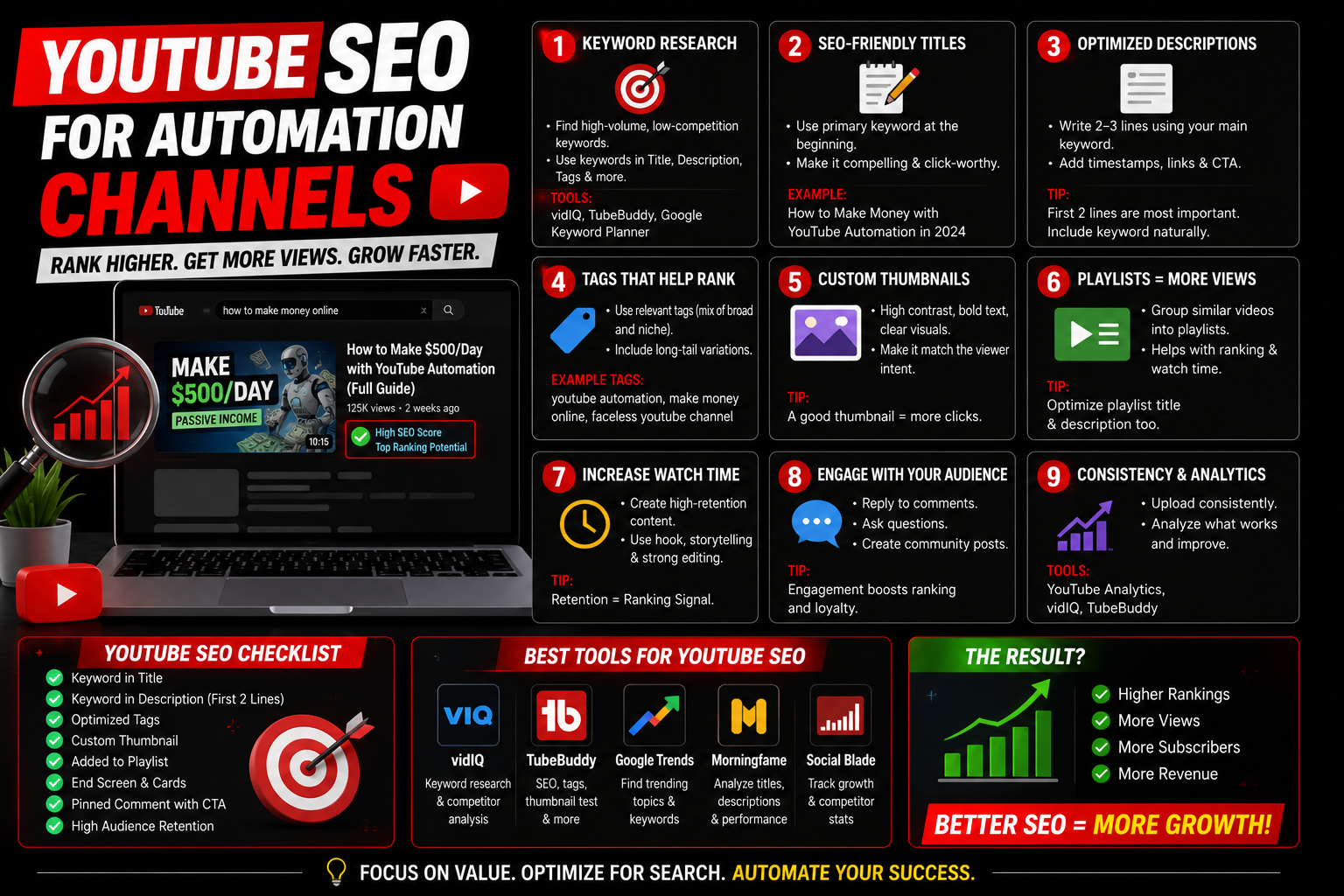
Understanding YouTube SEO Basics
- YouTube SEO, or Search Engine Optimization, encompasses a set of strategies aimed at enhancing the visibility of videos on the YouTube platform. As the second largest search engine in the world, YouTube’s ranking algorithms are crucial for ensuring that content reaches its intended audience. For automation channels specifically, understanding YouTube SEO is critical, as it can significantly affect the channel's growth and viewer engagement.
- At the core of YouTube SEO are keywords, which are terms and phrases that users enter into the YouTube search bar. Identifying the right keywords is essential, as they act as a bridge connecting content with viewers. Creators must focus on integrating these keywords naturally within their video titles, descriptions, and tags to improve discoverability. This can include using long-tail keywords or phrases that are relevant to the niche, ensuring that the content resonates with the audience's interests.
- Another fundamental aspect of YouTube SEO is metadata, which refers to the information that helps categorize and index videos. Metadata includes the title, description, and tags. A well-optimized title should be concise yet descriptive, incorporating relevant keywords to convey the video's content accurately. Additionally, the description should provide valuable context, utilizing both primary keywords and related terms to enhance the video’s visibility. Tags help further categorize the video, making it easier for YouTube’s algorithm to recommend it to potential viewers.
- Audience engagement metrics also play a pivotal role in YouTube SEO. Factors such as watch time, likes, comments, and shares influence how well a video ranks in search results. Automation channels should prioritize creating high-quality content that encourages viewer interaction, leading to better retention rates and improved rankings. By mastering these fundamental elements of YouTube SEO, creators can build a solid foundation that supports their channel’s growth and increases visibility in the highly competitive landscape of the platform.
Identifying Your Target Audience
- In the realm of YouTube, understanding your target audience is paramount for optimizing content and enhancing viewer engagement. By identifying the demographics, interests, and viewing habits of your audience, you can tailor your automation channel to meet their expectations effectively. This empathetic approach not only aids in the creation of content that resonates but also aids in implementing a successful YouTube SEO strategy.
- To begin, analyzing demographics will provide you with crucial insights into your audience's age, gender, location, and more. YouTube Analytics serves as a powerful tool in this respect, allowing creators to collect data regarding who is watching their videos, which can inform content direction and optimization efforts. For instance, if a significant portion of your audience comprises young adults, it’s essential to adjust the tone and style of your content to align with their interests and preferences.
- Beyond demographics, delving into the interests of your audience can unveil rich opportunities for content creation. Use tools like Google Trends and dedicated audience insight platforms to uncover what subjects your viewers are currently keen on. Furthermore, analyzing the viewing habits—such as when they are most active on YouTube—plays a crucial role in optimizing upload schedules. A well-timed release can significantly boost the visibility of your videos, contributing to higher engagement rates.
- Another effective strategy is to engage with your audience directly. Polls, comments, and tailored surveys can reveal what viewers enjoy and what they wish to see more of on your channel. This interaction not only nurtures community but also enhances loyalty among your subscriber base. By understanding your audience's unique preferences and behaviour patterns, you can create well-optimized content that not only meets but exceeds viewer expectations, establishing your automation channel as a valuable resource on YouTube.
Keyword Research for Automation Channels
- Conducting effective keyword research is a fundamental step in optimizing automation channels on YouTube. The primary goal is to identify keywords that align with your content and audience's search behavior. A good starting point would be to utilize keyword analysis tools such as Google Keyword Planner, Ahrefs, or TubeBuddy. These platforms help in generating keyword ideas, assessing search volumes, and understanding competition levels.
- When it comes to finding relevant keywords for automation-related content, it is essential to consider both direct keywords and long-tail keywords. Direct keywords may include terms like "automation tools" or "home automation systems," while long-tail keywords might be "best automation tools for small businesses" or "how to automate home security systems." Incorporating a mix of both can improve visibility in search results and cater to a broader audience.
- Another effective technique involves examining rival channels and their keywords. Analyzing competitors’ YouTube videos that rank well can reveal valuable keywords and strategies that may work for your channel. Moreover, reviewing the tags used in successful videos can provide insights into trending topics and similar content that audiences are searching for.
- Once you have a list of potential keywords, it is crucial to prioritize them based on both search volume and competition. High-search, low-competition keywords are generally the most desirable targets, as they are more likely to yield better rankings and visibility. As you refine your keyword list, consider factors such as relevancy to your content and the intent behind the search term. By meticulously conducting keyword research tailored specifically for automation channels, you enhance your potential to attract more viewers and grow your audience on YouTube.
Creating Optimized Video Content
- Optimizing video content for YouTube involves a multifaceted approach that focuses on several key elements, including scripting, pacing, and visual components. The primary aim is to enhance viewer engagement and retention while ensuring the video's visibility in search engines.
- Firstly, scripting forms the backbone of effective video content. It is vital to write a clear and concise script that addresses the audience's interests and needs. Begin by identifying relevant keywords associated with your subject matter and weaving them naturally into the script. This not only aids in search engine optimization but also makes the content more relatable to viewers. Consider using tools such as Google Trends or the YouTube search autocomplete feature to discover popular terms related to your niche.
- Pacing is another crucial aspect. An engaging video should maintain a dynamic pace that keeps viewers interested without overwhelming them. Aim for a rhythm that encourages viewer retention, typically achieved by alternating between spoken content and visual elements such as graphics or animations. This blend of media not only reinforces the message but also caters to varied learning styles, enhancing overall comprehension.
- In addition to scripting and pacing, incorporating visual elements is essential for creating memorable video content. Use high-quality visuals, such as images, charts, and infographics, to complement the spoken word. These elements can help break up dense information and provide visual interest that is likely to retain viewer attention.
- Furthermore, ensure that your videos have clear, eye-catching thumbnails and relevant titles that incorporate keywords without resorting to clickbait tactics. This approach will increase click-through rates, positively impacting your video's performance in search rankings on YouTube.
Crafting Effective Video Titles and Descriptions
- One of the fundamental aspects of YouTube SEO is the creation of compelling video titles and descriptions. These elements play a crucial role in determining how well your videos rank in search results and how appealing they are to potential viewers. A clear and relevant title can significantly increase a video's click-through rate, while a well-structured description provides search engines with essential information regarding the content of the video.
- The first step in crafting an effective video title is ensuring it is concise and directly reflects the content of the video. Aim for a title length of around 60 characters, as this permits a comprehensive representation without overwhelming viewers. Incorporating the primary keyword naturally within the title not only aids in search optimization but also allows viewers to immediately understand what the video entails. It is critical to avoid clickbait titles that mislead potential viewers; such practices may increase initial views but can lead to negative feedback, harming channel reputation in the long run.
- Once the title is finalized, attention should be directed towards the description. A well-written description serves multiple purposes: it offers additional context to viewers, explains the video's content and value, and aids in the video's discoverability through strategic keyword use. Begin with a brief summary of the video before delving into detailed content that engages and informs viewers. Incorporating relevant keywords throughout the description whilst maintaining a natural flow is key to effective optimization, allowing YouTube's algorithm to better index the video.
- Utilizing timestamps, links to related content, and calls-to-action within the description can further enhance engagement. Thus, by thoughtfully crafting video titles and descriptions, content creators can significantly increase their chances of success on YouTube while ensuring they remain aligned with SEO best practices.
Tagging Your Videos for Success
- Tags play an essential role in enhancing the discoverability of your videos on YouTube. They serve as a way to communicate the content of your video to the YouTube algorithm, facilitating better indexing and categorization. By utilizing effective tagging methods, you can significantly improve your videos' chances of appearing in search results and related video recommendations.
- When tagging your videos, it is crucial to adopt a balanced strategy that incorporates both broad and specific tags. Broad tags, such as "YouTube marketing" or "video production," can reach a wider audience, while specific tags, like "how to create a YouTube automation channel," help target niche segments. This combination allows for a more versatile appeal, ensuring that your content is accessible to various viewer types.
- To further enhance your tagging strategy, observe how your competitors tag their own videos. Analyzing the tags used by successful channels within your niche can provide valuable insights. Numerous tools are available that allow you to extract this information easily. Look for patterns and trends in their tags—notice common keywords or phrases that appear frequently. This analysis can inform your own tagging strategy, helping you identify which keywords you should consider incorporating into your videos.
- However, it is equally important to avoid the temptation of keyword stuffing. Overusing tags may lead to penalties or reduced visibility due to spammy practices. Instead, focus on a strategic mix of relevant keywords. By thoughtfully selecting your tags, you improve the chances of higher rankings and visibility on YouTube, ultimately driving traffic and engagement to your channel.
Utilizing Thumbnails to Improve Click-Through Rates
- In the competitive landscape of YouTube, utilizing custom thumbnails effectively can significantly enhance video performance, leading to improved click-through rates (CTRs). Thumbnails serve as a visual gateway to your content, making it essential to create eye-catching visuals that entice viewers. A thoughtfully designed thumbnail can make a substantial difference in how your video is perceived and can encourage more users to click and engage with your content.
- When designing thumbnails, it is imperative to focus on the visual elements that attract attention. Using bold colors, clear text, and captivating images can create a compelling visual narrative that conveys the essence of your video. Include elements related to the video content, such as images of popular products or enticing scenes from your footage. Furthermore, ensuring that the thumbnail is clearly visible on smaller screens, such as mobile devices, is vital since a large portion of YouTube's audience accesses content via smartphones.
- Another effective strategy involves incorporating text into your thumbnail design. Short, attractive phrases that highlight the value of your content can enhance viewer interest. For example, using phrases like "Top 10 Tips" or "Must-See Hacks" not only informs viewers of the subject matter but also entices curiosity. However, it is essential to maintain clarity and avoid cluttered designs, which can detract from the visual impact.
- To determine which thumbnails perform best, creators should consider A/B testing various designs. This process involves showcasing multiple thumbnails for the same video and monitoring which version generates more clicks over time. By analyzing the results, creators can gain insights into what resonates with their audience, ultimately optimizing their approach. Engaging thumbnails increase the chances of ranking higher in search results, ensuring that your content reaches a wider audience on YouTube.
Promoting Your Automation Channel for Organic Growth
- To successfully promote your automation channel and achieve organic growth, leveraging platforms beyond YouTube is essential. By exploring various marketing strategies, you can enhance your channel's visibility and attract a dedicated audience. Social media, collaborations, and online communities play pivotal roles in this promotion.
- Social media platforms, such as Facebook, Twitter, and Instagram, allow content creators to share snippets, highlights, or even behind-the-scenes content related to their automation videos. By doing so, you can pique the interest of users who may not be active on YouTube yet. It is crucial to tailor your messages for each platform, making them engaging and suitable for that specific audience. Regular updates and interactions with followers can also foster a sense of community and encourage sharing, effectively broadening your reach.
- Collaborations with other YouTube creators can greatly enhance visibility for your automation channel. By partnering with creators who have a complementary audience, you can exchange ideas, promote each other’s content, and cross-pollinate your subscriber bases. This strategy not only increases organic reach but also enriches the content on both channels, which can lead to a more engaged and responsive viewer base.
- Engaging with online communities relevant to your channel’s niche is another effective promotional strategy. Platforms such as Reddit or themed Facebook groups provide spaces to share your videos and expertise. However, it is important to participate genuinely in these communities and offer valuable insights without overtly promoting your content. When community members see you as an authority in automation, they are more likely to explore your YouTube channel.
- By effectively employing a combination of social media engagement, leveraging collaborations, and immersing yourself in community interactions, your automation channel can experience substantial organic growth. This multifaceted approach not only drives traffic but builds a loyal audience that appreciates your unique content.
Analyzing Performance and Adjusting Strategies
- To ensure the success of a YouTube automation channel, it is critical to diligently analyze performance metrics and adjust strategies accordingly. YouTube provides a plethora of insightful analytics tools that can help creators assess the efficacy of their content optimization efforts. By focusing on key performance indicators (KPIs), you can gain a clearer understanding of how your audience interacts with your videos and make informed decisions to enhance their experience.
- First, one of the most essential metrics to examine is watch time. This figure reflects the total number of minutes viewers have spent watching your videos. A high watch time indicates that your content is engaging and retains audience interest, while a drop in watch time may signal that adjustments are necessary. YouTube values watch time significantly, as it impacts video rankings and discoverability within the platform.
- Next, the click-through rate (CTR) is another vital variable to monitor. This metric measures the percentage of users who click on your video after seeing its thumbnail and title. A low CTR indicates that your titles and thumbnails may not be compelling enough, necessitating an evaluation and possible redesign to improve attractiveness.
- Additionally, audience retention data reveals how much of your video viewers consume before they drop off. This information can highlight specific points where viewer interest wanes, providing key insights into which parts of your content resonate best with your audience.
- By carefully examining these metrics, you can identify patterns and trends that inform future content development strategies. Adjustments to video formats, topics, and SEO tactics on YouTube can be made based on these insights, ultimately fostering greater engagement and growth for your automation channel.
Login or create account to leave comments
Comments (0)