
Introduction to AI in YouTube Content Creation
- As the digital landscape evolves, artificial intelligence (AI) has emerged as a transformative force in various fields, including content creation on YouTube. This platform, renowned for its vast array of video content, has seen a surge of creators adopting AI tools to enhance their video production processes. Many influencers and brands are now turning to AI for a multitude of applications, recognizing the efficiency and innovation it brings to their creative efforts.
- One of the primary applications of AI in YouTube content creation is video editing. AI-powered editing software can automate tedious tasks such as cutting, transitioning, and adding effects. This not only saves time for creators but also allows them to focus on the more conceptual aspects of their videos. Additionally, AI technology can assist in script generation, enabling content creators to generate ideas and outlines that are aligned with their target audience's preferences.
- Furthermore, AI is playing a critical role in thumbnail creation. Custom thumbnails are essential for attracting viewers, and AI can analyze trends and data to produce eye-catching thumbnails that resonate with specific demographics. Another significant application is audience analysis, where AI tools can scrutinize viewer behavior and commentary to provide creators with valuable insights. These insights help tailor content to meet audience demands, thereby increasing engagement and viewership.
- In summary, the integration of AI into YouTube content creation creates a multifaceted set of opportunities for creators. As they leverage these advanced tools, the landscape of content creation becomes increasingly sophisticated, allowing for higher quality videos and enhanced viewer interactions. This overview provides a foundation for discussing the subsequent advantages and disadvantages of utilizing AI in this creative domain.
Advantages of Using AI in YouTube Content Creation
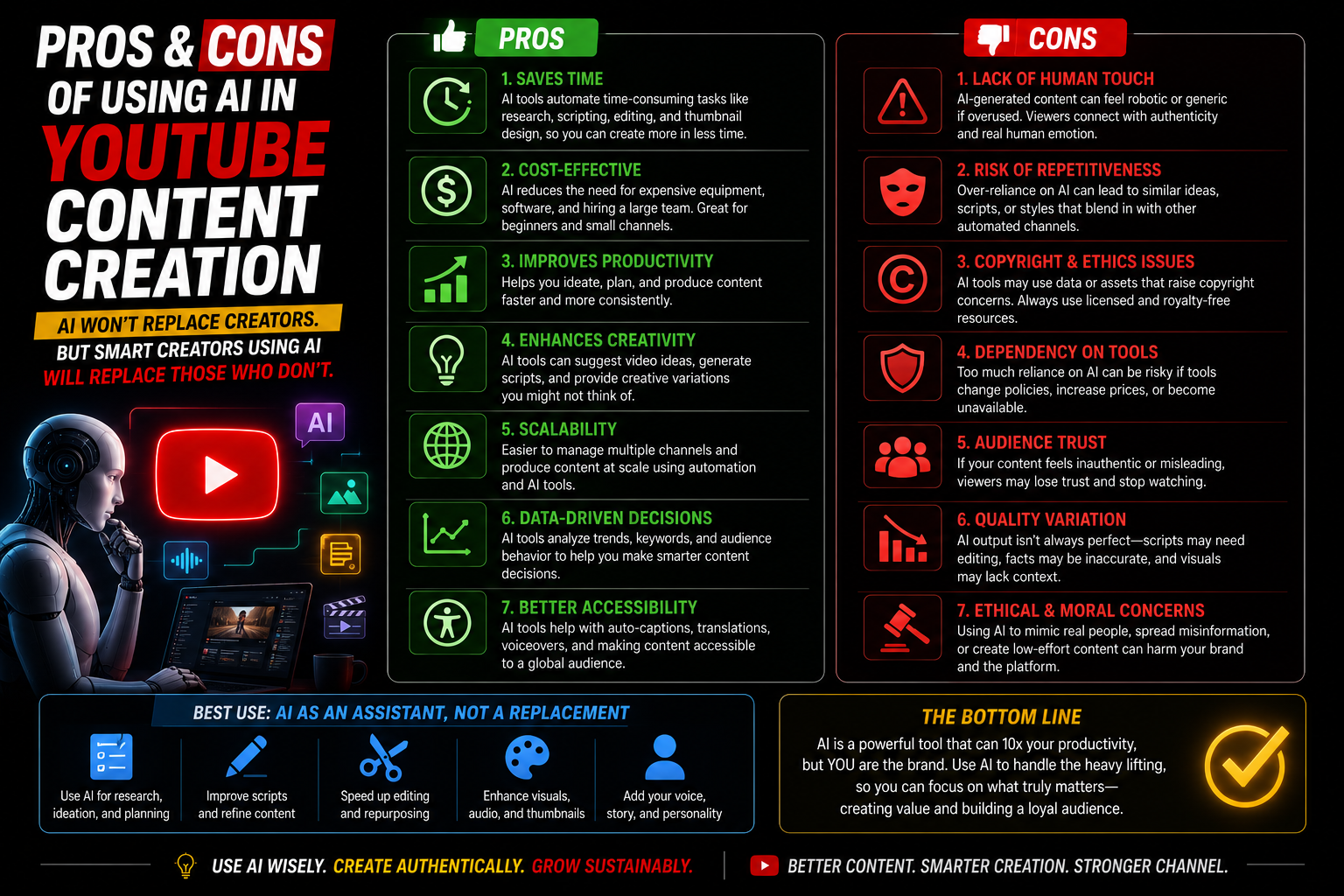
- The integration of artificial intelligence (AI) in YouTube content creation presents numerous advantages, significantly enhancing the productivity and efficiency of creators. As the landscape of digital media evolves, leveraging AI tools can streamline various aspects of the content production process. For instance, AI can automate routine tasks, such as video editing and caption generation, allowing creators to allocate more time towards creative ideation and strategy.
- Another substantial benefit of utilizing AI is the ability to generate data-driven content. With the vast amounts of data available on viewer preferences and habits, AI algorithms can analyze trends and suggest topics that are likely to resonate with the audience. This capability ensures that content creators on YouTube can craft videos that align with viewer interests, potentially increasing engagement and audience retention.
- Furthermore, AI enhances personalization for viewers. By analyzing user behavior, AI systems can recommend tailored content to users, increasing the likelihood of views and subscriptions. For example, creators can employ AI-driven insights to understand their audience demographics better, allowing them to create content that speaks directly to their viewers' needs and preferences.
- In terms of creative assistance, AI tools can support video production by suggesting edits, enhancing graphics, and even generating scripts. This technology not only improves the visual and auditory quality of videos but also ensures that creators can maintain a consistent posting schedule, as tasks become less time-consuming. The editing process, often one of the most labor-intensive aspects of creating YouTube content, can be made significantly more efficient through AI applications.
- Additionally, AI can play a pivotal role in improving SEO optimization. Enhanced search algorithms can assist creators in tagging and describing their videos more effectively, increasing visibility on the platform. As AI continues to evolve, its role in maximizing an individual channel’s reach through optimized content strategies cannot be overstated.
Disadvantages of Using AI in YouTube Content Creation
- While the integration of AI into YouTube content creation presents numerous advantages, several significant disadvantages warrant attention. One primary concern is the increasing dependency on technology. Content creators may find themselves overly reliant on AI tools for generating ideas, editing videos, or even developing scripts. This dependency can negatively impact their ability to produce original content without relying on automated systems, potentially stifling creativity and innovation.
- Furthermore, the use of AI can lead to a loss of originality and creativity in content. Automated systems often generate videos based on existing patterns and data analysis, which may result in content that lacks the unique voice and perspective that distinguishes successful YouTube creators. When videos predominantly depend on algorithmic reasoning, there is a risk that the content will become formulaic and less engaging for audiences seeking fresh and original perspectives.
- Ethical considerations also arise with the increased use of AI. Issues such as plagiarism can emerge when AI generates content that unintentionally mirrors existing works. Additionally, representation can become problematic, as algorithms might reinforce biases if they are trained on datasets lacking in diversity. This representation issue can lead to content that does not align with the values of inclusivity and fairness that many audiences expect from YouTube creators.
- Finally, while some AI tools are available at low or no cost, high-quality, sophisticated AI systems can be prohibitively expensive for many creators. The need for advanced technology can create a financial barrier that limits access to high-end tools, thereby widening the gap between established creators and those just starting. These disadvantages must be carefully weighed against the benefits when considering the role of AI in the YouTube landscape.
How AI Enhances Video Editing
- Video editing has undergone a significant transformation with the advent of artificial intelligence, enabling creators to improve their workflow and enhance the quality of their productions. AI-driven tools are playing a pivotal role in streamlining the entire editing process, making it not only faster but also more efficient. These technologies facilitate various editing tasks, thereby allowing YouTube creators to focus more on the creative aspects of their content.
- One of the most notable advancements in AI video editing tools is the automation of scene transitions. With machine learning algorithms, software can analyze footage and identify the most suitable transitions between clips, thus creating a more polished and professional finish without requiring extensive manual input. This automation saves considerable time, enabling editors to complete projects in shorter time frames.
- Additionally, AI tools significantly enhance audio quality, which is a critical element in video production. By automatically adjusting levels, reducing background noise, and even improving voice clarity, AI ensures that the auditory experience complements the visual elements seamlessly. This capability is invaluable for creators on platforms like YouTube, where audio-visual synergy can greatly influence viewer retention.
- Moreover, AI’s role extends to color grading and effects generation. Various AI-powered software can analyze footage and apply adjustments to color and lighting based on stylistic preferences or even industry standards. This functionality reduces the learning curve for novice editors who may not possess an in-depth understanding of color theory, allowing them to achieve cinematic results more effortlessly.
- In conclusion, AI technologies are revolutionizing video editing for YouTube and other content creators by providing valuable tools that enhance efficiency, automate complex tasks, and improve the overall quality of productions. This enhances not only the creative process but also the viewer's experience, making AI an indispensable asset in the video editing arsenal.
AI-Driven Content Strategy and Audience Engagement
- The integration of artificial intelligence (AI) in the realm of YouTube content creation has transformed how channel owners strategize their content and engage with their audiences. With sophisticated algorithms, AI tools are capable of analyzing viewer preferences and behaviors, which allows creators to gain valuable insights into what resonates with their audience. This capability can lead to more effective content planning and enhanced viewer satisfaction.
- One significant advantage lies in AI-powered analytics tools that track and compile data related to viewer engagement, including watch time, click-through rates, and audience demographics. By leveraging this data, creators can identify trending topics and tailor their video content accordingly. For instance, AI can recommend subjects based on current trends or insights gleaned from similar channels, enabling creators to stay relevant in a constantly evolving landscape.
- Moreover, AI can optimize posting schedules to maximize audience reach. By analyzing engagement data, these tools can suggest the best times to upload content for a specific audience, ensuring that videos achieve higher visibility and engagement rates. This optimization not only helps in retaining existing subscribers but also in attracting new viewers, which is crucial for channel growth.
- AI also facilitates the personalization of content strategies. It can help creators craft videos that directly cater to the preferences and interests of their target audience. Additionally, interactive features powered by AI can enhance user experience, encouraging higher engagement through tailored suggestions and follow-up content based on viewer history.
- Ultimately, utilizing AI in content strategy and audience engagement allows YouTube channel owners to capitalize on data-driven decisions. By understanding audience metrics and preferences, they can create compelling content that not only meets viewer expectations but also drives sustainable growth for their channels.
The Creative Limitations of AI in Content Creation
- Artificial Intelligence (AI) has made significant strides in many areas, including content creation for platforms like YouTube. However, despite its advancements, there remain substantial creative limitations that AI faces. One of these limitations is the difficulty AI has in capturing the nuances of storytelling. Great storytelling often relies on intricate human emotions, vivid imagery, and complex character development, aspects that AI struggles to replicate effectively. While algorithms can generate narratives based on data patterns, they frequently fall short of the depth and nuance required to engage an audience genuinely.
- Another limitation is the ability to establish emotional connections, which are pivotal in video content on YouTube. Content creators frequently leverage personal experiences, anecdotes, and relatable emotions to connect with viewers. In contrast, AI-generated content might create videos that are technically sound yet lack the genuine emotional resonance that can foster loyalty and connections with audiences. As a result, viewers may find content produced by AI to be impersonal or lacking in authenticity.
- Cultural context and sensitivity further compounds AI's creative limitations. Understanding cultural subtleties involves a rich appreciation of shared histories, values, and social dynamics, which AI systems often overlook. When AI generates content, it may inadvertently produce videos that misinterpret or misrepresent such contexts, leading to content that feels outdated or disconnected from current societal trends. This disconnect can alienate potential viewers, as cultural relevance is crucial for engaging an audience on YouTube.
- Ultimately, while AI serves as a valuable tool for content creators, it is essential to acknowledge its creative limitations. Human creativity, with its capacity for empathy, storytelling finesse, and cultural awareness, remains irreplaceable in producing high-quality and engaging YouTube content that resonates with viewers.
Case Studies: Successful and Unsuccessful AI Implementations
- The advent of artificial intelligence has significantly impacted various facets of content creation, particularly on platforms like YouTube. In this context, analyzing both successful and unsuccessful implementations of AI can provide valuable insights into its application in video production.
- One notable success story involves several YouTube creators who utilized AI to help streamline their video editing processes. Leveraging AI-driven tools allows creators to automate tasks such as color correction and sound mixing, resulting in polished final products with reduced production time. For instance, a popular travel vlog used AI to enhance visual elements in their videos, which led to a substantial increase in viewer engagement and subscription rates. By effectively blending AI technology with their unique content, the creators managed to elevate their channel's appeal, demonstrating how intelligent tools can complement creative efforts.
- Conversely, the pitfalls of AI in YouTube content creation are illustrated by a failed experiment from a media company that attempted to use AI for scriptwriting. Relying solely on algorithms to generate content resulted in videos that lacked coherence and failed to resonate with the target audience. The AI-generated scripts were noticeable for their generic messaging and poor storytelling, leading to negative feedback and low viewer retention. This case exemplifies the dangers of over-reliance on technology without proper human oversight in creative fields.
- These case studies highlight the dual impact of AI on YouTube. While it can enhance efficiency and quality when applied judiciously, there are also clear risks when it comes to relying too heavily on AI without sufficient human intervention. Therefore, creators should approach the incorporation of AI with a balanced perspective, weighing its advantages against potential drawbacks.
Best Practices for Leveraging AI in YouTube Content
- Incorporating AI tools into your YouTube content creation process can significantly enhance efficiency and creativity. However, to maximize the benefits of these technologies, it is essential to adopt certain best practices. First and foremost, selecting the right AI tools tailored to your specific content needs is crucial. Research various AI platforms that align with your goals, whether you are focusing on video editing, scriptwriting, or audience analytics. Each tool has unique features; therefore, conducting thorough comparisons and reading user reviews can guide you in making informed decisions.
- Another important aspect is maintaining a balance between AI-generated content and human creativity. While AI can automate various tasks, it should not replace the unique perspective and emotional connection that human creators bring to their work. Strive to utilize AI as an aid to enhance your creative process rather than a substitute. For example, you might use AI to generate ideas or optimize video titles, but the final script should reflect your personality and brand voice. This practice not only keeps your content authentic but also helps in connecting better with your audience.
- Furthermore, ethical content production should be at the forefront of any AI integration. Be transparent with your audience about using AI tools, as trust plays a vital role in audience loyalty. Additionally, ensure that the content generated does not violate copyright or intellectual property laws. Review AI suggestions critically, ensuring that they align with ethical standards in communication. By blending technology with a conscientious approach, you can effectively leverage AI in enhancing your YouTube channel without compromising on integrity.
Conclusion: Weighing the Pros and Cons
- As we have explored throughout this discussion, the integration of artificial intelligence in YouTube content creation brings with it a unique blend of advantages and challenges. On one hand, AI can significantly enhance efficiency by automating repetitive tasks, enabling creators to focus on the more creative aspects of their videos. Tools powered by AI can streamline editing, optimize video thumbnails, and even assist in generating insightful analytics, ultimately enhancing the potential for channel growth.
- However, the reliance on AI also necessitates careful consideration regarding the authenticity of content. Creators must weigh the benefits of employing AI tools against the potential risk of losing their personal touch and connection with their audience. Content that is overly polished or automated may lack the emotional resonance that viewers often seek. Furthermore, while AI can provide valuable insights, it cannot replicate the nuanced understanding and empathy that human creators possess.
- In light of these dynamics, creators are encouraged to reflect on their objectives and the essence of their content before integrating AI into their workflows. The successful use of AI in YouTube does not lie solely in adopting the latest technology but rather in striking a balance that preserves authenticity while reaping the benefits of innovation. By carefully assessing their approach, creators can leverage AI to enhance their content without compromising the personal engagement that fosters a loyal audience.
Login or create account to leave comments

Comments (0)