
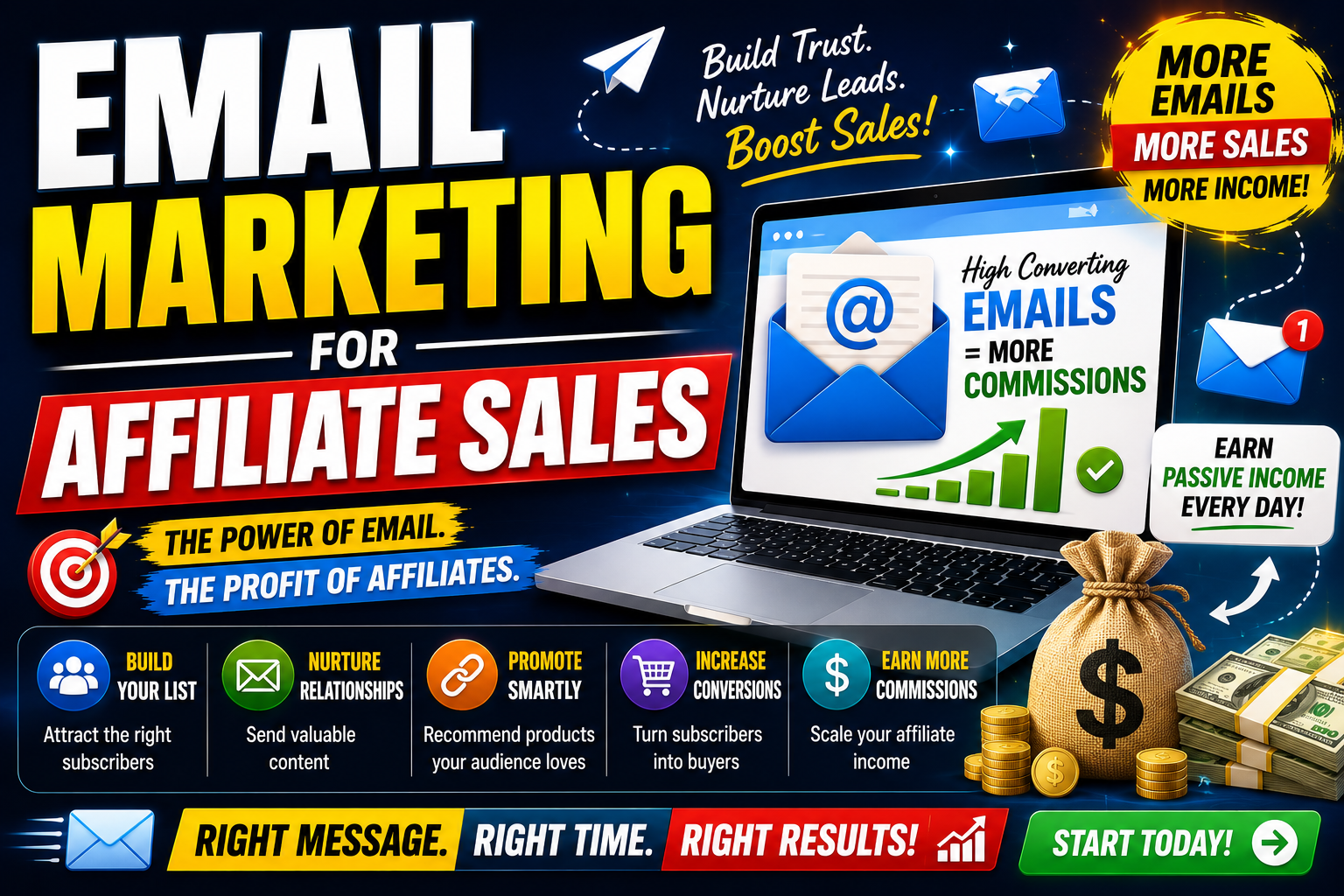
Introduction to Email Marketing for Affiliate Sales
- Email marketing has emerged as one of the most effective strategies for promoting affiliate sales among marketers and businesses alike. This direct marketing approach involves sending emails to current and potential customers to drive engagement and ultimately, sales. The importance of email marketing in the affiliate sales space cannot be understated, as it allows marketers to establish meaningful connections with their audience by communicating product recommendations, discounts, and relevant content.
- With the growing popularity of online shopping and a notable shift in consumer behavior towards digital interactions, email marketing presents a unique opportunity for affiliate marketers to thrive. Research shows that email marketing continues to maintain a high return on investment (ROI) compared to other marketing channels. This effectiveness can be attributed to the ability to reach a targeted audience and nurture relationships over time, ultimately guiding their purchasing decisions.
- The advantages of email as a marketing tool are clear. It not only allows for personalized communication but also enables marketers to segment their audience based on behavior, preferences, and demographics. This level of granularity enhances the relevance of the content shared, which is paramount in encouraging potential customers to take action. As emails can be easily tailored to include affiliate links, marketers can seamlessly integrate product promotions, leading to increased chances of conversions.
- As the blog post unfolds, we will delve deeper into various strategies and tips that can further amplify the effectiveness of email marketing for affiliate sales. By understanding the nuances of this marketing method, affiliates can harness its full potential, ultimately driving revenue and fostering long-term customer loyalty.
Understanding Your Target Audience
- In the realm of email marketing, understanding your target audience is paramount for maximizing affiliate sales. Identifying your audience allows marketers to create personalized content that resonates. This begins with gathering insights into your subscribers' demographics, behaviors, preferences, and interests. Surveys, feedback forms, and analytical tools can prove invaluable in collecting this information. Such data not only identifies who your audience is but also highlights what they seek, enabling you to align your email marketing strategies accordingly.
- Segmentation is a crucial element in this process. By categorizing your email list based on specific criteria such as age, location, gender, or purchase history, you can enhance the relevance of your campaigns. Targeted emails tend to yield higher engagement rates, as they cater specifically to the interests and needs of your various segments. For instance, a segment interested in fitness gear will respond differently to email offers compared to another segment focused on technology products. Thus, leveraging segmentation leads to improved open rates and click-through rates, translating into increased affiliate sales.
- Another essential aspect of understanding your target audience is ongoing analysis. Regularly reviewing engagement metrics can provide insight into what content performs best, allowing you to refine your approach continuously. By closely monitoring these metrics, marketers can identify trends within their audience's behavior, adjusting their messaging in real-time for optimal results. In conclusion, comprehensively understanding your target audience lays the groundwork for effective email marketing strategies, ultimately contributing to higher engagement and conversion rates, and maximizing affiliate sales.
Creating Compelling Email Content
- Crafting engaging and persuasive email content is crucial in maximizing affiliate sales through effective email marketing. The first crucial element in this process is the subject line. An attention-grabbing subject line is what will compel your audience to open the email. It should be concise, intriguing, and relevant to the reader. Incorporating personalization, such as adding the recipient's name or referencing their previous interactions with your brand, can significantly enhance open rates. Aim for a balance between creativity and clarity to encourage clicks without creating confusion.
- Once your email is opened, the body content needs to capture the reader's attention and retain their interest. Employ a friendly yet professional tone that aligns with your brand’s voice. Begin with a compelling introduction that quickly summarizes what the reader can expect. You should aim to hit the reader emotionally; stories, testimonials, or data-driven insights can be valuable in creating a connection. Focus on addressing the pain points of your audience, presenting your affiliate products as solutions without sounding overly promotional. This approach not only builds trust but also encourages readers to consider the value of the offerings.
- Finally, the call to action (CTA) is a critical element in driving conversions. A well-placed, clear CTA guides the audience on the next steps you want them to take. It should be visually distinct, using contrasting colors and compelling language, prompting urgency when appropriate. Phrases like "Shop Now," "Learn More," or "Get Started Today" can effectively direct readers while highlighting the benefits of immediate action. When your email content harmonizes engaging subject lines, captivating body text, and powerful CTAs, it significantly increases the potential for affiliate sales success.
Building an Effective Email List
- Creating an effective email list is essential for maximizing affiliate sales through email marketing. A well-curated list not only enables direct communication with potential customers but also increases the chances of conversions significantly. To build an email list, it is crucial to employ a variety of strategies that focus on capturing email addresses effectively and ethically.
- One effective method for capturing email addresses is through the use of lead magnets. A lead magnet is an enticing incentive that encourages visitors to provide their contact information. This can be in the form of free ebooks, exclusive discounts, informative webinars, or useful templates. By offering high-quality content that aligns with the interests of your target audience, you can significantly increase your sign-up rates.
- Additionally, integrating opt-in forms on your website or blog is a practical way to capture emails. These forms should be strategically placed and visually appealing, ensuring they attract attention without being intrusive. It is also beneficial to keep the sign-up process simple, requiring only essential information like the user's email address and first name, to minimize barriers to entry.
- Maintaining an effective email list also involves adhering to ethical practices, such as obtaining informed consent from subscribers and complying with data protection regulations like GDPR. This means that users must willingly opt-in to receive communications, and they should have the option to unsubscribe at any time. Transparency about how their information will be used fosters trust and encourages ongoing engagement.
- Lastly, regularly cleaning your email list by removing inactive subscribers will help maintain a healthy engagement rate. By ensuring your email list consists of genuine, interested recipients, you can enhance your email marketing efforts, ultimately leading to higher affiliate sales.
Email Design Best Practices
- Effective email marketing relies significantly on the design of the emails being sent out. A well-crafted email not only captures attention but also encourages the reader to engage with the content. One of the essential best practices in email design is maintaining a clean and organized layout. This involves using a simple grid structure that allows recipients to quickly navigate through the information presented. Adequate white space is crucial, as it helps prevent visual clutter, making the email more approachable and easier to digest.
- Incorporating appealing visuals within the email is also vital. Utilize high-quality images that relate to your content and resonate with your target audience. However, it is essential to balance images and text, ensuring that the email remains predominantly text-focused, as many email clients do not display images by default. Including alt texts for images is a good practice, as it improves accessibility and provides context when images are not shown.
- Mobile optimization has become increasingly important in email marketing due to the prevalence of users accessing their emails on mobile devices. According to recent studies, over half of all emails are opened on mobile devices, underscoring the need for responsive design. Emails should be designed to automatically adjust to various screen sizes, ensuring optimal readability and engagement regardless of the device. Utilizing a single-column layout tends to work well for mobile views, allowing for easier scrolling and reading.
- In summary, by adhering to these email design best practices, marketers can create visually appealing and effective emails. Incorporating simplicity, engaging visuals, and ensuring mobile compatibility are key elements that enhance the user experience, ultimately leading to higher engagement rates and increasing the potential for maximizing affiliate sales.
Timing and Frequency of Emails
- Effective email marketing relies heavily on the timing and frequency of the messages sent to recipients. Selecting the right time to send an email can significantly impact open rates and engagement levels. Research suggests that the optimal times for sending emails often coincide with weekdays and specific times during the day, such as early mornings or lunch breaks. However, these general guidelines may vary based on your target audience’s behavior and preferences, necessitating a tailored approach.
- It is vital to test different email delivery times to find the sweet spot for your specific segment. A/B testing can effectively determine when your audience is most responsive. By analyzing metrics such as open rates and click-through rates, you can pinpoint the optimal timing for your campaigns. Over time, this data-driven approach will help refine your email marketing strategy, ensuring that your messages reach recipients when they are most likely to engage.
- Equally important is the frequency of emails sent to your subscribers. Striking the right balance is crucial; while consistent communication can help build relationships with your audience, sending too many emails can lead to frustration and increased unsubscribe rates. Best practices suggest a moderate frequency, such as once a week or bi-weekly, depending on the type of content and the interests of your audience. Additionally, using segmentation strategies can help tailor the frequency of emails to different subscriber groups, ensuring that they receive communications that are relevant and engaging.
Measuring Success: Analytics and Metrics
- In the realm of email marketing, particularly within the context of affiliate sales, understanding how to measure success is crucial. Key Performance Indicators (KPIs) serve as a valuable tool for evaluating the effectiveness of email campaigns. By analyzing various metrics, marketers can make informed decisions to enhance future email marketing strategies.
- One of the primary metrics to consider is the open rate, which indicates the percentage of recipients who open the emails. A high open rate suggests that the subject line and overall sender reputation are effective. However, if the open rate is low, it may necessitate a reevaluation of these critical elements. A general benchmark for open rates hovers around 15%-25%, but this can vary based on industry standards.
- Another vital metric is the click-through rate (CTR), reflecting the percentage of recipients who clicked on one or more links within the email. A high CTR indicates that the content is engaging and encourages further exploration of the affiliate products or services promoted. To calculate CTR, divide the total number of clicks by the number of delivered emails, and express this as a percentage. Typical CTR benchmarks range from 2%-5%, but exceeding these figures can signify particularly effective campaigns.
- Conversion rates, which measure the percentage of recipients who complete a desired action—such as making a purchase—are essential for assessing the ultimate effectiveness of email marketing efforts. This metric directly correlates to affiliate sales, making it a critical point of analysis. By tracking conversions, marketers can ascertain which emails and strategies yield the highest ROI.
- By diligently monitoring these and other relevant metrics, marketers can fine-tune their email marketing campaigns, ensuring that they not only reach their target audience but also drive meaningful engagement and sales.
A/B Testing Your Email Campaigns
- A/B testing, also known as split testing, is an essential method used in email marketing to optimize campaigns for better results, particularly for affiliate sales. This technique involves sending out two variations of an email to different segments of your audience and analyzing which version performs better. The core objective of A/B testing is to enhance email engagement and conversion rates by determining what resonates most effectively with recipients.
- To implement A/B testing successfully, it's crucial to identify specific elements of your emails to test. One primary area is the subject line, which holds the power to influence open rates significantly. Experimenting with different wording, lengths, and even the inclusion of emojis can yield insights into your audience's preferences. By measuring the open rates of each subject line, you can discern which style attracts more engagement.
- Another vital aspect to consider is the content variation within your emails. Different layouts, writing styles, or thematic approaches can be tested to understand what encourages your audience to interact with your affiliate links. Testing variations in images, text emphasis, or even the overall tone of the message can provide valuable feedback about what captures your audience's attention.
- Moreover, it is essential to focus on your email design, as visual elements play a significant role in user experience. Simple changes in color schemes, button placements, or font choices can impact click-through rates. Additionally, the call to action (CTA) is another critical component to test. This can involve experimenting with different phrasing, color contrasts, or positions within the email to find the most effective approach.
- By systematically implementing and analyzing these A/B tests within your email marketing strategy, you can acquire actionable insights that lead to improved affiliate sales. Monitoring performance metrics closely will enable your campaigns to evolve, ensuring that your messages resonate with your audience and drive optimal results.
Conclusion and Future Trends in Email Marketing
- As we wrap up our discussion on maximizing affiliate sales through effective email marketing, it is essential to revisit the key takeaways. Employing targeted email marketing strategies can greatly enhance engagement and conversion rates. Leveraging segmentation, personalization, and compelling call-to-action elements has shown to significantly increase customer responsiveness. Furthermore, integrating affiliate links seamlessly within well-crafted content is crucial for driving sales and establishing credibility with the audience.
- Looking ahead, various emerging trends are poised to shape the future of email marketing. One of the most significant trends is automation, which simplifies the process of sending timely and relevant emails without manual intervention. By utilizing automated workflows, marketers can ensure that customers receive tailored messages based on their preferences and behaviors, enhancing overall effectiveness.
- Another trend gaining momentum is personalization. Customers are more likely to engage with emails that address their individual needs and interests. Marketers can utilize data analytics to deliver customized content, thereby fostering deeper connections with their audience. As consumer expectations evolve, personalized emails are transforming into a requisite for successful email marketing strategies.
- Additionally, the integration of artificial intelligence (AI) is revolutionizing email marketing. AI-powered tools can analyze vast datasets, allowing marketers to predict customer behavior, optimize email send times, and create personalized experiences at scale. These technologies not only improve efficiency but also enable marketers to craft smarter campaigns that resonate with their audience.
- In conclusion, staying ahead in the dynamic landscape of email marketing requires constant adaptation and innovation. By embracing automation, personalization, and AI integration, marketers can enhance their affiliate sales through more effective email marketing strategies. Therefore, it is imperative for businesses to remain informed about these trends and continually refine their approaches to meet the ever-changing needs of their consumers.
Login or create account to leave comments

Comments (0)