
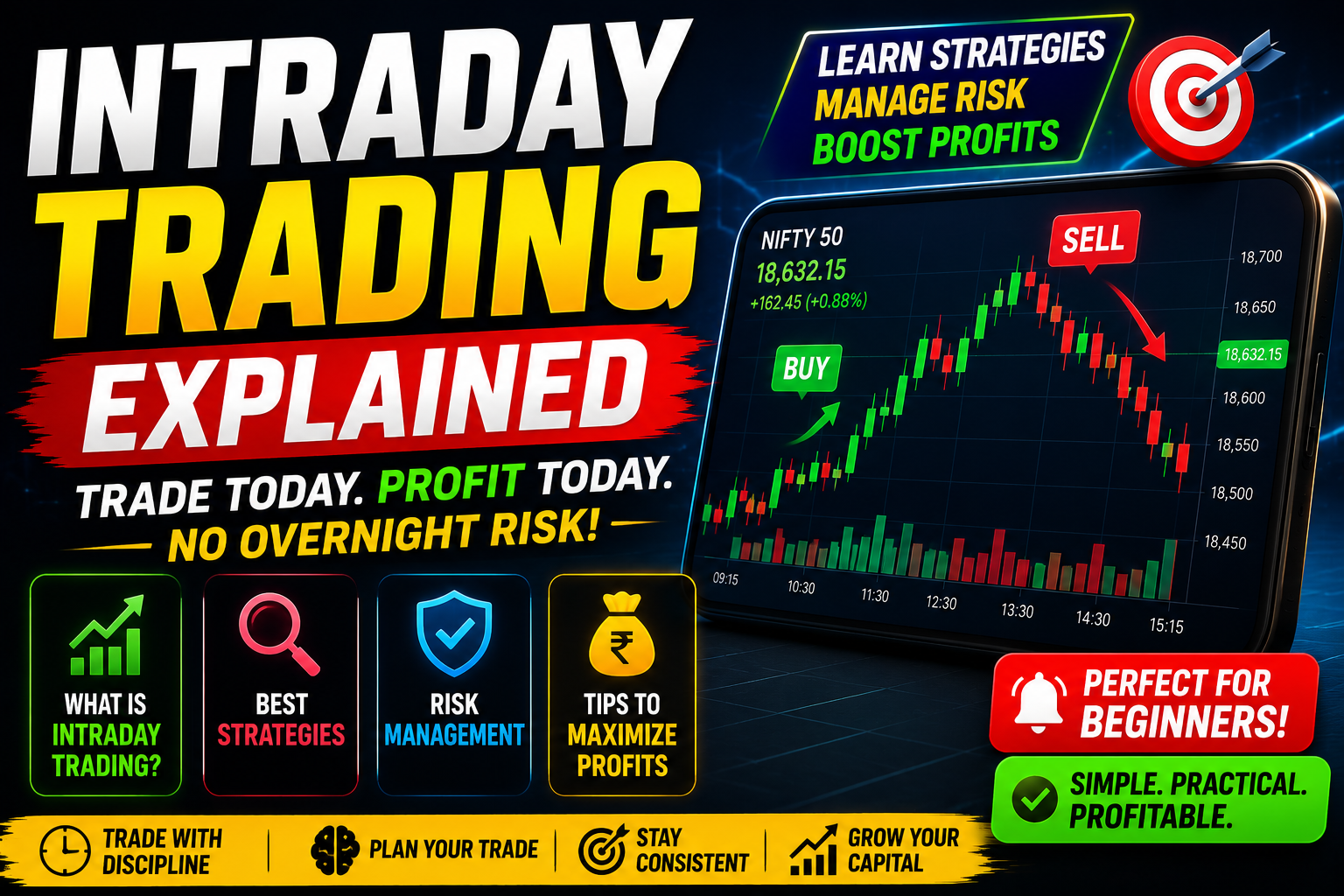
Introduction to Intraday Trading
- Intraday trading, also referred to as day trading, is a trading strategy where individuals buy and sell financial instruments within the same trading day. This approach capitalizes on the volatility and fluctuations in the price of assets, allowing traders to potentially earn profits from short-term movements in the market. Unlike long-term investing, which typically involves holding positions for months or years, intraday trading requires a more active approach. Traders need to closely monitor their positions and the market environment throughout the trading day.
- The primary goal of intraday trading is to benefit from small price shifts, which can accumulate significantly when leveraged properly. Traders utilize various financial instruments such as stocks, options, futures, and forex to exploit these short-term opportunities. Each of these instruments has its own level of volatility and liquidity, and a trader's choice often depends on their individual risk tolerance, market knowledge, and trading style.
- Many traders prefer intraday trading over long-term strategies due to its potential for immediate profit. While long-term investments are grounded in thorough research and analysis often requiring patience, intraday trading offers quicker results. Additionally, the rapid pace of intraday trading can be exhilarating for many, driving a sense of urgency and excitement. Furthermore, intraday trading can be suitable for individuals seeking a flexible schedule, as it allows them to dedicate specific hours to trading without requiring long-term commitments.
- Nevertheless, this trading approach is not without risks. The impact of market news, economic indicators, and sudden price movements can significantly influence intraday trading outcomes, necessitating a solid understanding of market dynamics and effective risk management techniques. Novice traders are often advised to start cautiously, employing strategies that minimize risk while maximizing the potential for returns.
Key Characteristics of Intraday Trading
- Intraday trading is characterized by the buying and selling of financial instruments within the same trading day. Traders engaged in this practice seek to capitalize on short-term price movements, typically holding positions for a few minutes to several hours at most. This day trading strategy eliminates the risk of adverse price movements that can occur overnight, thereby allowing traders to manage their exposure effectively.
- The time frame in which intraday traders operate is one of the defining features of this trading style. These traders focus on shorter time frames, often using charts that display minute-to-minute or hour-to-hour price changes. As a result, intraday trading requires a keen eye for market fluctuations and strong analytical skills to make quick decisions based on real-time data.
- Another characteristic of intraday trading is the variety of financial instruments commonly traded. Intraday traders typically engage with a range of assets including stocks, currencies (forex), commodities, and derivatives such as options and futures. The choice of instrument often depends on individual trading strategies, risk tolerance, and market conditions. Stocks are popular due to their high volatility and liquidity, which provide ample opportunities for profit in short time frames.
- The speed at which trades are executed is also critical in intraday trading. Successful traders utilize sophisticated trading platforms equipped with advanced order types and analytical tools to execute trades rapidly. High-frequency trading, for example, is a specific form of intraday trading that leverages algorithms to capitalize on minute price discrepancies. Thus, an understanding of market mechanics and access to real-time information are essential for thriving in this fast-paced environment.
Advantages of Intraday Trading
- Intraday trading presents several advantages that make it an attractive strategy for many investors. One of the most significant benefits is the potential for quick profits. Traders engage in buying and selling securities within the same trading day, allowing them to capitalize on minute fluctuations in stock prices. This rapid trading can lead to substantial gains within a short time frame.
- Moreover, intraday trading often involves leveraging positions, which means traders can control larger amounts of capital with a relatively small investment. This strategy can amplify profits if the market moves favorably. Leverage, however, is a double-edged sword; it can also amplify losses if the market moves against the trader’s position. Therefore, it is crucial for traders to apply effective risk management techniques to mitigate potential downsides.
- Another appealing aspect of intraday trading is the avoidance of overnight market risks. Holding positions overnight can expose traders to various risks, such as unexpected news or events that can cause significant price swings when the market reopens. Intraday traders close all their positions before the market closes, thereby eliminating exposure to these risks. This feature not only provides a sense of security but also allows traders to maintain a continuous cash flow, enabling them to reinvest their profits the next day. With the right strategy and a thorough understanding of market movements, intraday trading can be a highly effective method for generating income in today’s fast-paced trading environment.
Risks Involved in Intraday Trading
- Intraday trading is characterized by the buying and selling of financial instruments within a single trading day. While this dynamic approach offers the potential for substantial profits, it is accompanied by several inherent risks that traders must be acutely aware of. Understanding these risks is essential for anyone looking to engage in intraday trading.
- One significant risk is market volatility. The stock market can experience rapid fluctuations throughout the trading day, influenced by various factors, including economic reports, political events, or market sentiment. Such volatility can lead to rapid price changes that may result in unexpected gains or losses. A trader engrossed in intraday trading must be prepared to react quickly to these price swings. Failure to do so can have dire consequences, often resulting in significant financial losses.
- Another critical risk is associated with leveraging. Many intraday traders utilize margin accounts, borrowing funds from their brokerage to enhance their trading positions. While leverage can amplify profits, it equally magnifies losses. A small adverse movement in the market can lead to substantial financial damage, and in extreme scenarios, traders may find themselves facing margin calls, necessitating additional deposits to maintain their positions.
- Lastly, psychological challenges pose significant risks in intraday trading. The fast-paced environment often leads to pressure and stress, which can impair decision-making. Emotional trading, driven by fear or greed, can result in poor choices, further exacerbating losses. Traders must cultivate discipline, employing robust risk management strategies to mitigate these psychological hurdles and maintain focus on their trading plans.
- In conclusion, while intraday trading offers opportunities for profit, the associated risks of market volatility, leveraging, and psychological challenges must not be underestimated. A thorough understanding and preparation for these risks are critical for successful trading outcomes.
Tools and Platforms for Intraday Trading
- Intraday trading, characterized by the quick buying and selling of securities within the same trading day, necessitates the use of specialized tools and platforms for effective execution. Traders typically rely on advanced trading software that facilitates the simultaneous processing of multiple trades and the analysis of market trends in real time. Such software often comes with features like direct market access, real-time data feeds, and customizable interface options tailored to individual traders' needs.
- One crucial component of a successful intraday trading strategy is access to robust charting tools. These tools enable traders to visualize market movements and identify potential opportunities quickly. Various charting software programs allow traders to apply technical analysis, using indicators such as moving averages, Bollinger Bands, and candlestick patterns. With the aid of these analytical tools, intraday traders can make informed decisions, which is vital given the volatile nature of day trading.
- Furthermore, a reliable internet connection is paramount in intraday trading. The speed and stability of the internet can significantly impact trade execution, especially when every second can influence the profitability of a position. Traders often invest in high-speed broadband services to ensure seamless connectivity, reducing latency and minimizing the risks associated with disconnections during crucial trading moments.
- In summary, the right tools and platforms play an essential role in an intraday trader's success. By utilizing sophisticated trading software, effective charting tools, and ensuring a solid internet connection, traders can enhance their operational efficiency and respond swiftly to market fluctuations. As the landscape of intraday trading continues to evolve, staying updated on the latest technological advancements remains a critical factor for success.
Developing an Intraday Trading Strategy
- Creating an effective intraday trading strategy is crucial for any trader looking to succeed in the fast-paced world of short-term trading. Several key components contribute to the development of a robust strategy, including identifying entry and exit points, setting stop-loss orders, and the importance of backtesting strategies.
- Firstly, determining entry and exit points is foundational to effective intraday trading. Traders often utilize technical indicators, such as moving averages, resistance and support levels, or chart patterns to identify optimal entries based on market trends. A well-defined entry strategy helps to minimize risks, enabling traders to capitalize on price movements swiftly. Conversely, exit points are equally critical. Successful traders often determine these points in advance, employing techniques like trailing stops to secure profits and minimize losses as market conditions change.
- Moreover, setting stop-loss orders is a vital component in an intraday trading strategy. A stop-loss order serves as a safety net, allowing traders to limit potential losses before they become substantial. The positioning of these orders should be strategic, often placed just below a recent low for a buy position or above a recent high for a selling position. This measure not only preserves capital but also maintains emotional discipline, which is essential for making sound trading decisions.
- Additionally, backtesting strategies cannot be overlooked. It refers to testing a trading strategy on historical data to evaluate its performance. Backtesting allows traders to refine their strategies without risking real capital. By analyzing past market behavior, traders can adjust their entry and exit points or tweak their stop-loss placement, enhancing the overall reliability of their approach.
- In summary, developing a comprehensive intraday trading strategy requires careful consideration of entry and exit points, effective use of stop-loss orders, and diligent backtesting. These elements work collectively to improve trading success and help traders navigate the complexities of intraday market movements.
Technical Analysis in Intraday Trading
- Technical analysis plays a crucial role in intraday trading, allowing traders to make informed decisions based on price movements and market trends. Unlike fundamental analysis, which evaluates a company's financial health, technical analysis focuses on price charts and indicators to forecast future price action. By analyzing historical data, traders can identify patterns that may suggest future performance, which is particularly valuable in the fast-paced environment of intraday trading.
- One of the most common tools used in technical analysis is the moving average. This indicator smooths out price data to create a trend-following mechanism, making it easier to identify potential support and resistance levels. Traders often utilize two types of moving averages: the simple moving average (SMA) and the exponential moving average (EMA). The EMA is particularly favored in intraday trading as it gives more weight to recent price actions, reflecting the most current market sentiments.
- In addition to moving averages, other technical indicators such as the Relative Strength Index (RSI) and Bollinger Bands are frequently employed by traders. The RSI measures the speed and change of price movements, indicating overbought or oversold conditions, while Bollinger Bands consist of a middle band (SMA) and two outer bands that indicate volatility. These tools, when used in conjunction, can provide insights into market trends, enabling traders to make more strategic buy and sell decisions.
- Chart patterns also play a key role in technical analysis. Patterns such as head and shoulders, flags, and triangles can signal potential reversals or continuations in the market. Recognizing these patterns allows traders to anticipate price movements, enhancing their decision-making process. By leveraging technical analysis, intraday traders can improve their risk management strategies and enhance the likelihood of achieving their trading goals.
Tips for Successful Intraday Trading
- Intraday trading, characterized by buying and selling stocks within the same trading day, can be highly rewarding yet equally risky. To achieve success in intraday trading, traders must adhere to certain strategies that promote discipline, minimize emotions, and manage risks effectively.
- Firstly, cultivating discipline is paramount. Traders should establish a solid trading plan that outlines their entry and exit points, and stick to it rigorously. This disciplined approach helps in avoiding impulsive decisions that could arise from market fluctuations. By adhering to a predefined strategy, traders can maintain focus and operate more systematically, reducing the likelihood of making hasty decisions based on transient market movements.
- Moreover, managing emotions plays a crucial role in successful intraday trading. Emotionally driven decisions can lead to significant losses, particularly in a fast-paced trading environment. Traders should strive to remain composed and avoid chasing after potential profits during moments of excitement or panic. Techniques such as mindfulness and pre-trade routines can help mitigate emotional responses, ensuring that trading decisions remain logical and evidence-based.
- Another vital aspect of successful intraday trading is proper risk management. Traders should determine the amount of capital they are willing to risk on each trade and adhere to this limit. Implementing stop-loss orders is one effective strategy; it allows traders to set predetermined exit points to minimize potential losses. Additionally, Diversifying one's portfolio can aid in spreading risk, thus reducing the impact of adverse movements in any single stock.
- Ultimately, by observing these principles, traders can significantly enhance their chances of achieving consistent success in intraday trading. Successful traders understand that the key lies in disciplined execution, emotional restraint, and robust risk management strategies, leading to a more sustainable trading practice.
Conclusion: Is Intraday Trading Right for You?
- Intraday trading is a dynamic and potentially lucrative approach to the financial markets, but it is not without its challenges. As we have explored in this guide, this trading style involves making multiple trades throughout the day, requiring a keen understanding of price movements and quick decision-making skills. Successful intraday trading demands not only a solid grasp of market fundamentals but also a disciplined approach to risk management.
- When considering whether intraday trading aligns with your financial goals, it is crucial to evaluate your risk tolerance and investment style. Intraday trading can be more volatile compared to long-term investing; thus, it may not be suitable for everyone. Individuals comfortable navigating rapid market fluctuations and who are equipped with strategies for both profit-taking and loss prevention are more likely to thrive in this environment. Conversely, those with a lower risk appetite may find greater success with a longer-term investment strategy.
- Moreover, the technical analysis skills acquired through intraday trading can bolster your overall trading acumen. This experience can provide insights applicable across various trading styles, fostering a deeper comprehension of market trends and behavioral economics. Thus, even if you choose not to pursue intraday trading as your primary strategy, the knowledge gained can be beneficial.
- In light of these considerations, if you are intrigued by the prospect of intraday trading, further education and practice are essential. Whether through simulations, paper trading, or engaging in discussions with experienced traders, continued exploration can help refine your strategies. Ultimately, understanding your strengths and weaknesses will aid in determining if intraday trading is a viable choice as you navigate your trading journey.
Login or create account to leave comments

Comments (0)