
Introduction to Influencer Marketing
- Influencer marketing has emerged as a pivotal strategy within the digital marketing landscape, revolutionizing how brands engage with their target audiences. This approach leverages the power of influencers—individuals who have built credibility and a following in specific niches—to promote products or services. As traditional advertising methods undergo transformations, influencer marketing offers a more authentic and relatable way for brands to connect with consumers.
- The rise of social media platforms has significantly contributed to the proliferation of influencers. With an increasing number of individuals creating content and sharing their experiences online, brands have recognized a unique opportunity to leverage these relationships. Instead of relying solely on conventional advertising channels, businesses can engage influencers to promote their offerings, capitalizing on the trust that influencers have cultivated within their communities.
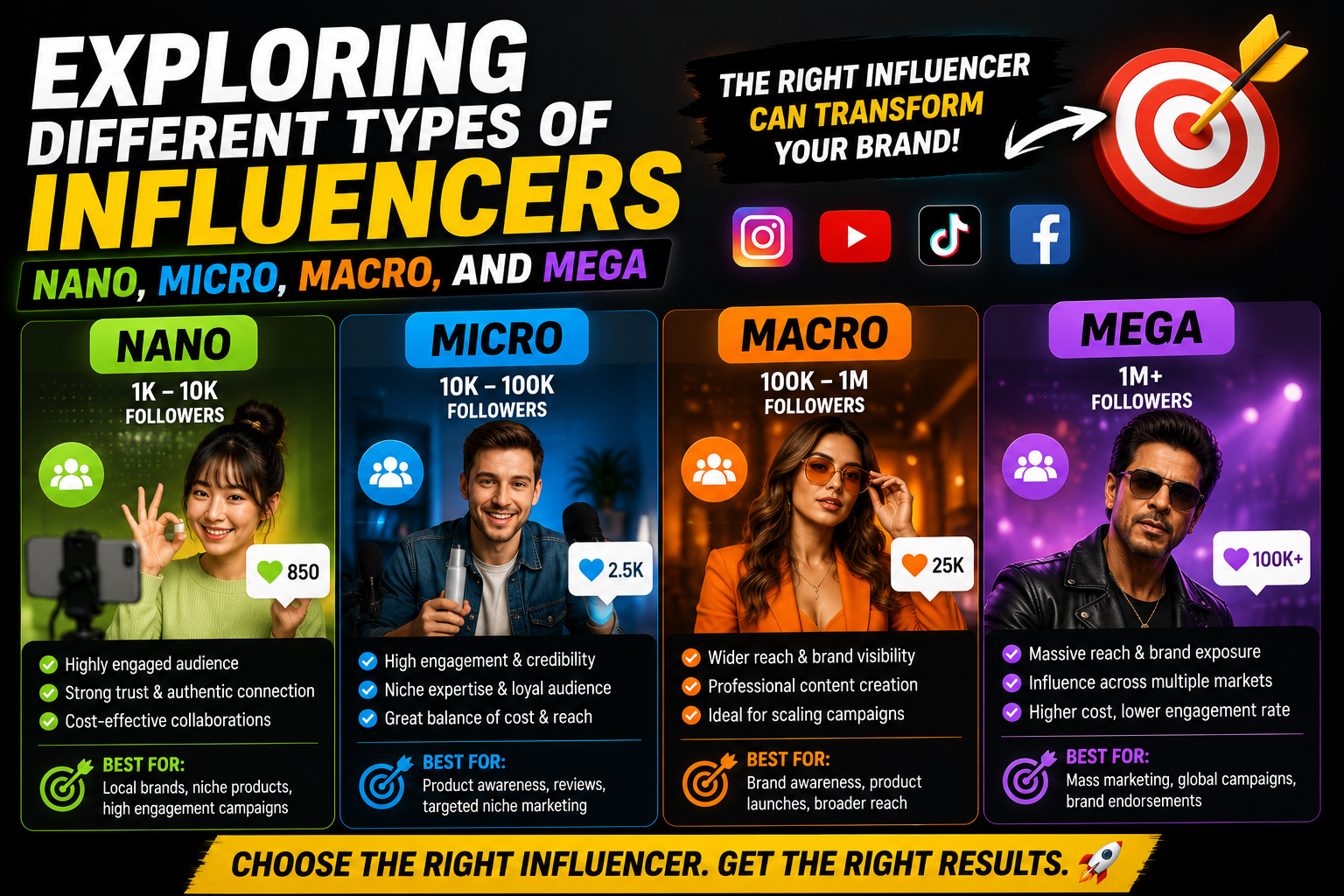
- In recent years, the scope of influencer marketing has expanded, encompassing various types of influencers categorized by their follower counts and engagement levels: nano, micro, macro, and mega influencers. Each of these groups presents unique advantages and challenges, making it crucial for marketers to understand where their strategies can be most effectively applied.
- The importance of influencer marketing lies in its ability to foster authentic connections between brands and consumers. People are more likely to trust recommendations from those they follow and admire, which enhances the likelihood of conversions. As influencers share their insights and experiences with products, they effectively bridge the gap between brands and audiences, creating a symbiotic relationship that benefits both parties.
- As we explore the various types of influencers, it becomes clear that each category plays a distinct role in shaping brand narratives within the marketing framework. Understanding how to engage with these influencers can lead to successful marketing campaigns that resonate with audience values and preferences.
What Are Nano Influencers?
- Nano influencers are defined as social media users who possess a follower count ranging typically from 1,000 to 10,000. They represent a unique category within the influencer marketing landscape, characterized by their intimate and trustworthy relationships with their audience. This smaller follower base allows nano influencers to achieve high engagement rates, often surpassing those of larger influencers with a more extensive reach.
- One of the most notable qualities of nano influencers is their authenticity. Because they often have a more niche audience, their followers are typically highly engaged and share similar interests. This creates an environment where nano influencers can communicate more personally and meaningfully with their audience. As a result, the trust built between the influencer and their followers can lead to higher conversion rates when it comes to marketing campaigns.
- Additionally, nano influencers' ability to connect deeply with their followers presents a strategic advantage for brands seeking to target specific demographics or niche markets. For instance, a small beauty brand aiming to launch a new product might collaborate with a nano influencer who specializes in skincare. This influencer can deliver genuine feedback and promote the product within a community that values authentic recommendations, leading to more effective marketing outcomes.
- Several case studies illustrate the impact of nano influencers in marketing campaigns. For example, a local fitness brand collaborated with several nano influencers who focused on health and wellness. By utilizing their targeted reach, the brand achieved impressive engagement and conversion rates, demonstrating how nano influencers can amplify brand messages in compelling ways.
- In essence, nano influencers play a critical role in contemporary marketing strategies, particularly as brands seek to engage audiences more personally and authentically.
Exploring Micro Influencers
- Micro influencers are individuals who possess a social media following ranging from 10,000 to 100,000 followers. Unlike their mega influencer counterparts, micro influencers tend to have a more niche audience, often leading to higher levels of engagement and more authentic connections with their followers. This balance of scale and personal touch is a significant factor that brands can leverage for targeted marketing efforts.
- Engagement rates for micro influencers tend to be notably higher than those seen with larger influencers, with studies indicating that micro influencers can achieve engagement rates of up to 7%. This elevated interaction is primarily due to the close-knit communities that micro influencers cultivate. Their followers often view them as relatable individuals rather than distant celebrities, making their endorsements appear more genuine and trustworthy.
- Brands aiming to reach specific demographics can utilize micro influencers effectively. By seeking influencers whose audiences align with their target market, companies can ensure that their marketing messages resonate on a personal level. Popular platforms where micro influencers thrive include Instagram, TikTok, and YouTube. Each of these platforms allows for diverse content types, enabling influencers to express their personalities while engaging their audiences through sponsored content, product reviews, and lifestyle posts.
- Several successful collaborations illustrate the efficacy of micro influencers. For instance, brands often engage micro influencers to promote niche products, resulting in significant increases in brand visibility and sales. These success stories highlight how micro influencers can play a vital role in a brand’s marketing strategy, enabling businesses to penetrate specific markets and connect with consumers who are genuinely interested in their offerings.
Understanding Macro Influencers
- Macro influencers are defined by their impressive follower counts, usually ranging between 100,000 to 1 million on platforms like Instagram, Twitter, and YouTube. This significant reach allows them to connect with a large audience, making them an appealing choice for brands seeking to expand their visibility. Unlike their nano and micro counterparts, macro influencers often maintain a level of professionalism that resonates well with both audiences and businesses.
- In many cases, macro influencers are regarded as celebrities within their specific niches or industries. Their substantial following often implies a certain level of expertise or authority, which they leverage to engage with their audience effectively. This perceived status not only enhances their credibility but also amplifies the brands they promote, as their endorsements are often viewed as valuable recommendations by followers.
- Successful collaborations between macro influencers and brands can yield impressive results. For example, well-known brands like Gymshark and Fashion Nova have utilized macro influencers to reach vast audiences and promote their products successfully. These collaborations often lead to higher engagement rates, increased brand awareness, and ultimately, a notable return on investment (ROI). When influencers share posts featuring their collaborations, their extensive reach can drive traffic and sales significantly.
- Furthermore, brands benefit from the polished content macro influencers produce, which is typically of high quality. This quality, combined with the influencer’s established reputation, ensures that brands are represented professionally, thereby enhancing their own image in the eyes of potential customers. As the digital landscape continues to evolve, leveraging macro influencers has become a vital strategy for brands looking to amplify their marketing efforts and connect with a broader audience.
The Role of Mega Influencers
- Mega influencers are defined as individuals who possess more than one million followers on their social media platforms. Often, these influencers include celebrities, major public figures, and well-known personalities who have built a substantial online presence. Their wide appeal often allows them to reach a vast audience across various demographics, making them a formidable force in the realm of influencer marketing.
- One of the primary advantages of collaborating with mega influencers is their extensive reach. Brands can leverage their connections to promote products or services to a global audience in a matter of minutes. The media coverage often associated with such influencers can amplify this reach even further, turning locally marketed campaigns into international phenomena. Campaigns they are involved in tend to generate a significant amount of buzz, and their endorsement can lend additional credibility to a brand, attracting more consumers.
- However, working with mega influencers does come with its challenges. Due to their high follower count, it can be difficult for brands to achieve audience segmentation. Mega influencers often cater to a general audience rather than a specific niche, which can dilute the effectiveness of targeted marketing efforts. Furthermore, the cost associated with engaging mega influencers can be prohibitively expensive for some brands, particularly smaller enterprises. The balance between the potential return on investment and the substantial upfront costs is a critical consideration.
- In addition, mega influencers may face scrutiny regarding their authenticity and engagement rates. With an enormous following, the level of trust from followers can vary significantly, and the emotional connection is often less intense than that formed with smaller influencers. Therefore, brands should conduct thorough research to ensure that the mega influencer aligns with their brand values and can effectively communicate their message to the intended audience.
Comparing Influencer Types: Which One is Right for Your Brand?
- In the ever-evolving landscape of digital marketing, choosing the right influencer type can significantly impact a brand's reach and engagement. Influencers can be categorized into four main types: nano, micro, macro, and mega influencers. Each type offers distinct advantages, and brands must evaluate their marketing goals and resources before making a choice.
- Nano influencers, with follower counts ranging from 1,000 to 10,000, tend to have high engagement rates, often characterized by a devoted community. They typically focus on niche markets, making them ideal for brands looking to connect with specific audiences authentically. Due to their smaller following, partnerships with nano influencers can also be more budget-friendly, allowing brands to execute multiple influencer campaigns without significant overhead.
- Micro influencers, who attract between 10,000 to 100,000 followers, present a balance between reach and engagement. They often possess a better understanding of their audience and can drive higher levels of interaction when compared to larger influencers. Brands may choose micro influencers when aiming for campaigns that require higher trust levels and interactions, as their endorsements often come across as more genuine and relatable.
- On the other hand, macro influencers possess follower counts of 100,000 to 1 million. These influencers have established personal brands that can provide significant visibility for larger campaigns. They tend to have broader yet less engaged audiences, making them suitable for brands with larger marketing budgets aiming for mass exposure. However, the trade-off may include lower engagement ratios compared to their smaller counterparts.
- Lastly, mega influencers, with follower counts exceeding 1 million, are celebrities or high-profile figures. Brands often engage them for extensive campaigns to reach vast audiences quickly. While they can be effective for elevating brand visibility, the costs can be prohibitive and engagement rates may be lower.
- Ultimately, the right influencer type for your brand will depend on budget constraints, target audience demographics, and desired engagement levels. Careful consideration of these factors can guide brands toward successful influencer partnerships that align with their overall marketing strategy.
Building Relationships with Influencers
- Establishing and nurturing relationships with influencers in various categories—nano, micro, macro, and mega—requires a multifaceted approach. Each influencer type has unique characteristics that can influence the way brands should communicate and collaborate with them. Understanding these differences allows brands to tailor their strategies effectively.
- To initiate contact with influencers, consider starting with personalized communication. Rather than generic outreach messages, take the time to research the influencer’s content, preferences, and audience. Crafting a tailored message that acknowledges their work and proposes mutually beneficial partnerships can significantly increase the likelihood of a positive response. Begin by engaging with their content on social media, showing genuine interest in what they do, which can lay a solid foundation for future collaboration.
- Providing value is crucial in building long-lasting relationships. This could mean offering products for review, proposing content collaborations, or providing access to exclusive events. Nurturing a relationship shouldn’t be a one-off event; consider establishing ongoing engagements that keep the influencer involved and valued. Amount and relevance of compensation should also reflect the influencer's reach and impact while remaining equitable, demonstrating respect for their work.
- Maintaining authenticity in partnerships is paramount. Influencers built their audiences based on trust and credibility; therefore, brands should aim to foster authenticity rather than manipulate it. Allow influencers the creative freedom to present products or services in a way that resonates with their audience rather than imposing strict guidelines. This autonomy not only enhances the content's authenticity but also engenders goodwill, making influencers feel valued in the partnership.
- Overall, successful relationships with influencers are built on personalized communication, providing genuine value, and preserving authenticity. By adhering to these strategies, brands can maximize collaborative efforts across all influencer categories.
The Future of Influencer Marketing
- As we look toward the future of influencer marketing, several trends are emerging that may significantly reshape the landscape. One notable trend is the integration of artificial intelligence (AI) within marketing strategies. AI can analyze vast datasets, allowing brands to identify relevant influencers who resonate with their target audiences more effectively. This technology can also predict consumer behavior, enabling companies to tailor their marketing efforts in real-time, enhancing the impact of influencer collaborations.
- Additionally, the rise of virtual influencers, created entirely through computer-generated imagery (CGI), presents a unique opportunity for brands. These digital personalities can interact with audiences on social media platforms without the unpredictability associated with human influencers. Brands can leverage virtual influencers to maintain control over brand messaging, create captivating stories, and engage consumers in innovative ways. However, the acceptance of virtual influencers will hinge on consumer perceptions of authenticity and relatability.
- Changing societal norms surrounding authenticity and trust are also playing a significant role in shaping the future of influencer marketing. Modern consumers are increasingly discerning and place a higher value on transparency. As a result, brands may need to cultivate long-term relationships with influencers who genuinely align with their values. This shift will likely prioritize ethical considerations and authenticity in influencer partnerships, leading to more meaningful connections with audiences.
- Furthermore, the diversification of influencer types—ranging from nano to mega influencers—will continue to influence marketing strategies. Brands may gravitate toward smaller influencers as they often boast high engagement rates and a more personal touch. In summary, the future of influencer marketing will likely be characterized by a blend of technological advancements and evolving consumer expectations, driving brands to adapt how they connect with their target audiences.
Conclusion: Choosing the Right Influencer for Your Campaigns
- In the rapidly evolving landscape of digital marketing, understanding the distinct types of influencers—nano, micro, macro, and mega—is crucial for developing effective marketing strategies. Each category possesses unique characteristics and advantages that can significantly impact the reach and effectiveness of a campaign. For instance, nano influencers are often valued for their high engagement rates and authentic connections with niche audiences, while mega influencers offer vast reach and visibility that can elevate brand awareness to unprecedented levels.
- It is essential for brands to carefully assess their goals, target demographics, and specific messaging needs when selecting influencers for collaborations. Brands that align their values and messages with the right influencer not only ensure better audience resonance but also foster trust and authenticity in their campaigns. Understanding the strengths of each influencer type can facilitate informed decision-making, leading to more fruitful partnerships.
- Furthermore, reputation and audience perception play significant roles in the influencer's effectiveness. A well-aligned influencer can enhance a brand's image and contribute positively to its narrative. Therefore, businesses should not only evaluate metrics such as follower count and engagement rates but also consider the influencer's affinity with their target audience and the overall brand ethos.
- Ultimately, the selection process demands a combination of strategic thinking and a keen understanding of both influencer dynamics and brand identity. By carefully considering these aspects, brands can forge meaningful influencer relationships that drive their marketing campaigns to greater heights.
Login or create account to leave comments
Comments (0)